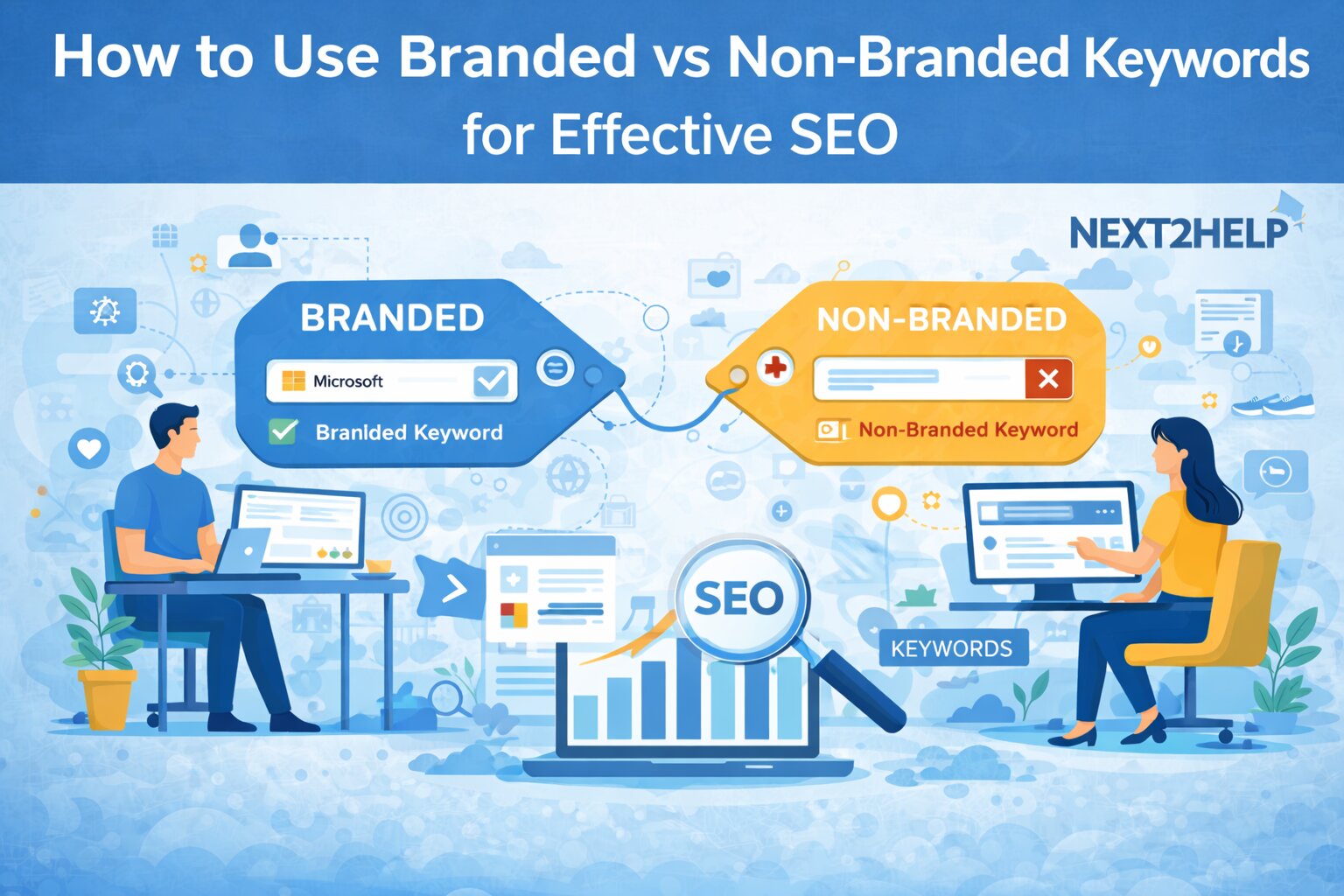
Businesses that want to be seen online and get more visitors need to know the difference between branded vs non-branded keywords in the world of SEO (Search Engine Optimization). These two types of keywords are different from any other, and using them strategically can make a big difference in how well your digital marketing campaigns work. This post will talk about the main distinctions between branded and non-branded keywords, why they are important for your SEO strategy, and how to use both to get the most out of your digital marketing.
The Next2Help Digital Marketing Course in Noida also offers in-depth training on digital marketing and SEO, which will help you learn useful skills that will help you advance in your career.
What Are Branded Keywords?
Branded keywords are search terms that include the name of your brand or variations of it. These keywords typically involve specific brand names, products, or services that directly tie to your business. For instance, if you own a business called "XYZ Electronics," your branded keywords would include terms like “XYZ Electronics,” “XYZ laptops,” or “XYZ product line.”
Why Are Branded Keywords Important?
Branded keywords often indicate higher intent from users. People searching for your brand are already aware of it and are more likely to convert into customers. They are further along in the customer journey, often looking for specific information, reviews, or product details about your business.
Using branded keywords effectively can:
- Increase visibility for your brand among users who already recognize it.
- Improve CTR (Click-Through Rate) on paid ads or organic search results.
- Build brand loyalty and trust with your audience.
For example, if someone searches for “XYZ Electronics laptop reviews,” they’re likely a potential customer interested in buying from your store. The more relevant and engaging your content around branded terms is, the better your conversion rate will be.
What Are Non-Branded Keywords?
Non-branded keywords, on the other hand, do not include your business name. Instead, these are general search terms related to the industry or services you offer, but without any specific brand association. For example, a non-branded keyword for an electronics business could be “best laptops” or “affordable laptops.”
Why Are Non-Branded Keywords Important?
Non-branded keywords are essential for attracting new customers who may not yet know about your brand. These keywords typically have a larger search volume, as they relate to general queries. While these terms can drive more traffic to your website, they also come with challenges:
- Higher competition: Because these keywords are not brand-specific, many businesses compete for them.
- Lower conversion rates: Non-branded searches typically represent users earlier in the customer journey, meaning they might not be ready to make a purchase immediately.
Despite these challenges, non-branded keywords are important for brand discovery and reaching a wider audience.
Branded vs Non-Branded Keywords in SEO Strategy
When it comes to SEO, understanding the differences between branded and non-branded keywords can help you determine how to allocate your resources effectively. Here’s a breakdown of how these two types of keywords play a role in your SEO strategy:
Branded Keywords:
- Cost-Effective: Ranking for branded keywords is often easier and more cost-effective, especially if your brand is already well-known.
- Local SEO: Branded searches can help you dominate local search results. For example, “XYZ Electronics Noida” is a targeted search for users in that area, which can improve foot traffic and lead generation.
- Conversion Focus: Users who search for your brand name are already interested, making it easier to convert them into customers.
Non-Branded Keywords:
- Traffic Generation: These keywords drive a large amount of traffic, as they attract users who may not yet know your brand.
- Keyword Variety: By targeting non-branded keywords, you can explore a range of search queries, including long-tail keywords (e.g., “affordable laptops under $500”).
- Building Authority: Ranking for non-branded keywords allows your website to establish authority in your industry, making it easier to rank for branded keywords later.
Both types of keywords should work in tandem. While branded keywords help with conversion, non-branded keywords help with discovery. Combining the two allows you to build a well-rounded SEO strategy.
How to Optimize for Branded and Non-Branded Keywords
Now that you understand the key differences, it’s important to know how to optimize for both branded and non-branded keywords. Here are some tips:
Branded Keyword Optimization:
- Focus on Your Brand’s Core Values: Create content that speaks to your audience’s interests and concerns. Include branded terms naturally throughout your content and product pages.
- Use Paid Ads: If your brand is well-known, paid search ads for branded keywords can ensure you're always at the top of the search results.
- Leverage Social Media: Promote your brand and products on social media to increase awareness and encourage users to search for your brand.
Non-Branded Keyword Optimization:
- Keyword Research: Use tools like Google Keyword Planner, Ahrefs, or SEMrush to discover non-branded keywords with high search volume but lower competition.
- Long-Tail Keywords: These are more specific and often less competitive than broader non-branded keywords. For example, “best budget laptops for students” is a more specific long-tail keyword than just “best laptops.”
- Create High-Quality Content: Since non-branded keywords typically target users earlier in the decision-making process, provide valuable, informative, and engaging content that answers their questions.
A balanced approach using both branded and non-branded keywords is the key to sustainable SEO success.
Learn More at Next2Help Digital Marketing Course in Noida
The Next2Help Digital Marketing Course in Noida is the best location for you to learn more about SEO and how to optimize keywords. This course will teach you all you need to know about keyword research and advanced SEO methods, so you'll be able to use both branded and non-branded keywords. The course gives you hands-on training that will improve your skills and help your business develop, no matter how much experience you have as a marketer.
Conclusion
To sum up, both branded and non-branded keywords are quite important for a good SEO strategy. Branded keywords help you get people who already know about your business, while non-branded keywords help you reach more people and get new clients. You may get more traffic to your website and higher conversion rates by knowing the difference between the two types and how to use them both wisely.
If you want to improve your SEO skills, you might want to sign up for the Next2Help Digital Marketing Course in Noida. You will be able to get genuine results for your business with the help of experts and hands-on expertise.

Categories
Recent posts


Best Institute for a Digital Marketing ...
8 Jul 2024
Unlock Your Future with Next2Help Best ...
8 Jul 2024
is react native worth learning in 2026
17 Mar 2026