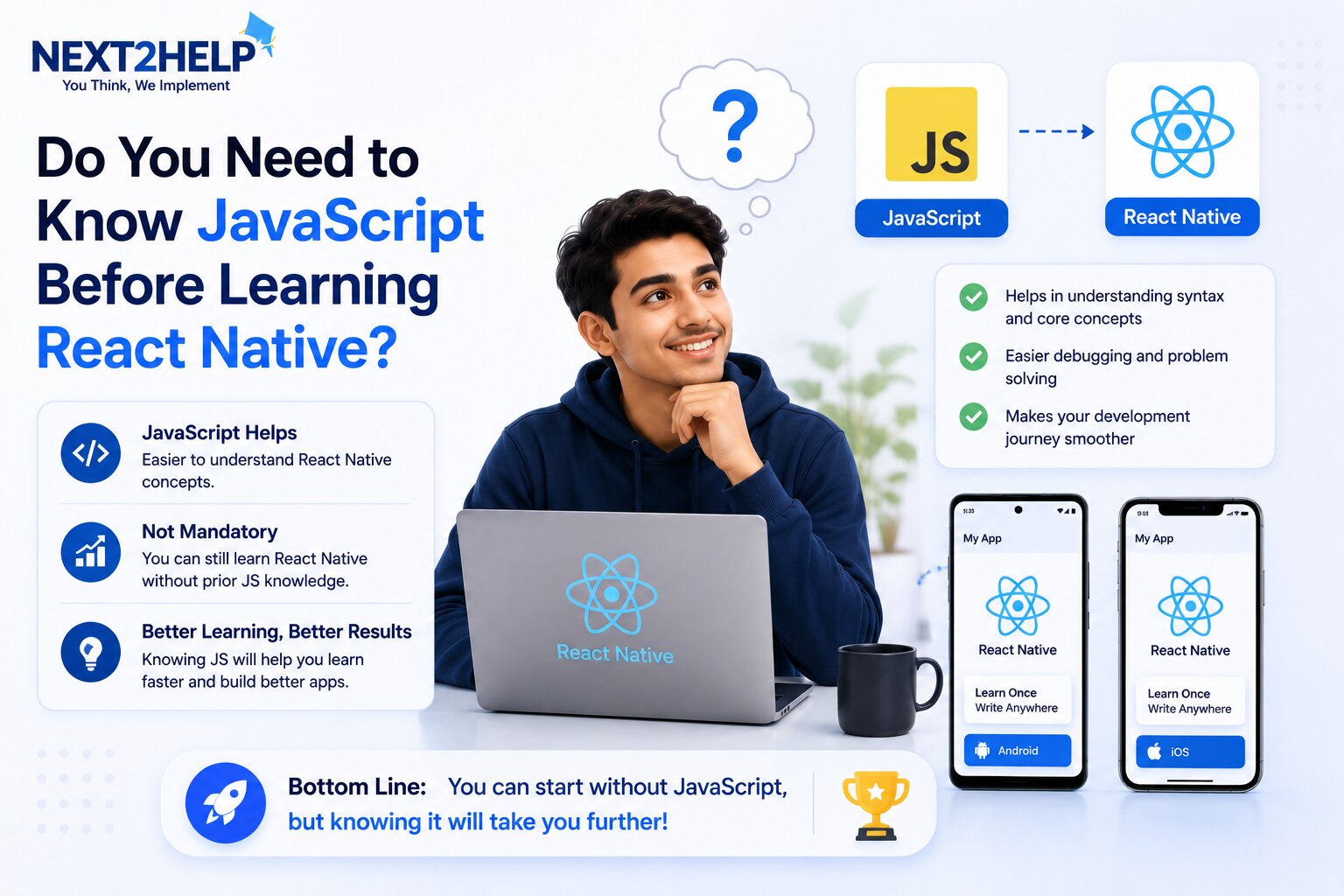
Yes — and it's one of the most important steps you can take. React Native is built entirely on JavaScript. Every component, function, and piece of logic is JavaScript. Skipping JS and jumping straight into React Native is like trying to write essays before learning the alphabet.
Why JavaScript Is Essential for React Native
1. React Native IS JavaScript
React Native doesn't compile to Java or Swift from scratch — it runs a JavaScript engine (Hermes or JSCore) under the hood. Your entire app logic lives in JS files. Without JavaScript fundamentals, you can't read, write, or debug your own code.
2. React Comes First
React Native is React — for mobile. Before touching mobile development, you need to understand React concepts like components, props, state, and hooks. And React itself requires solid JavaScript knowledge.
The correct learning path is:
- JavaScript → React → React Native
3. Debugging Becomes Impossible Without JS
Errors in React Native show JavaScript stack traces. If you don't know JavaScript, you'll have no idea what went wrong or where to look. A strong JS foundation makes debugging fast and intuitive.
What JavaScript Concepts You Actually Need
You don't need to master all of JavaScript — focus on these core areas:
JS Concept | Why It Matters |
Variables (let, const, var) | Foundation of all logic |
Functions & Arrow Functions | Used in every component |
Arrays & Objects (.map, .filter) | Rendering lists and data |
ES6+ Syntax | Modern React Native code style |
Promises & async/await | Essential for API calls |
Modules (import/export) | Structuring your app |
How Long Should You Study JavaScript First?
Your Goal | Recommended JS Study Time |
Build simple apps | 4–6 weeks |
Freelance / job-ready | 3–4 months |
Professional developer | 6+ months |
You don't need to be a JavaScript expert before starting React Native — but you need to be comfortable, not just familiar.
Common Mistake Beginners Make
Many developers watch a few JavaScript videos and jump into React Native tutorials, copying code without understanding it. This creates a frustrating loop: the app works until something breaks, and then you're completely lost.
A solid JavaScript foundation prevents this entirely and saves weeks of confusion.
The Recommended Learning Path
Step 1 — JavaScript Fundamentals (4–8 weeks)
- Variables, functions, arrays, objects
- ES6+ features: destructuring, spread, template literals
- Async/await and Promises for API calls
Step 2 — React Basics (2–4 weeks)
- Components, JSX, and props
- State management with useState
- Side effects with useEffect
Step 3 — React Native (ongoing)
- Navigation with React Navigation
- Styling with StyleSheet API
- Device APIs and platform-specific code
- Building and deploying to iOS and Android

Categories
Recent posts


Best Institute for a Digital Marketing ...
8 Jul 2024
Unlock Your Future with Next2Help Best ...
8 Jul 2024
is react native worth learning in 2026
17 Mar 2026