Search Engine Optimization (SEO) is one of the most valuable digital marketing skills today. Whether you're a student, business owner, freelancer, or marketing professional, learning SEO can open doors to career growth and online business opportunities. The good news is that you don't need expensive SEO tools to get started.
Many beginners believe they need premium subscriptions to succeed in SEO. While advanced tools can be helpful, the fundamentals of SEO can be learned using free resources, practical experience, and the right training. Here's how you can master SEO without spending a fortune.
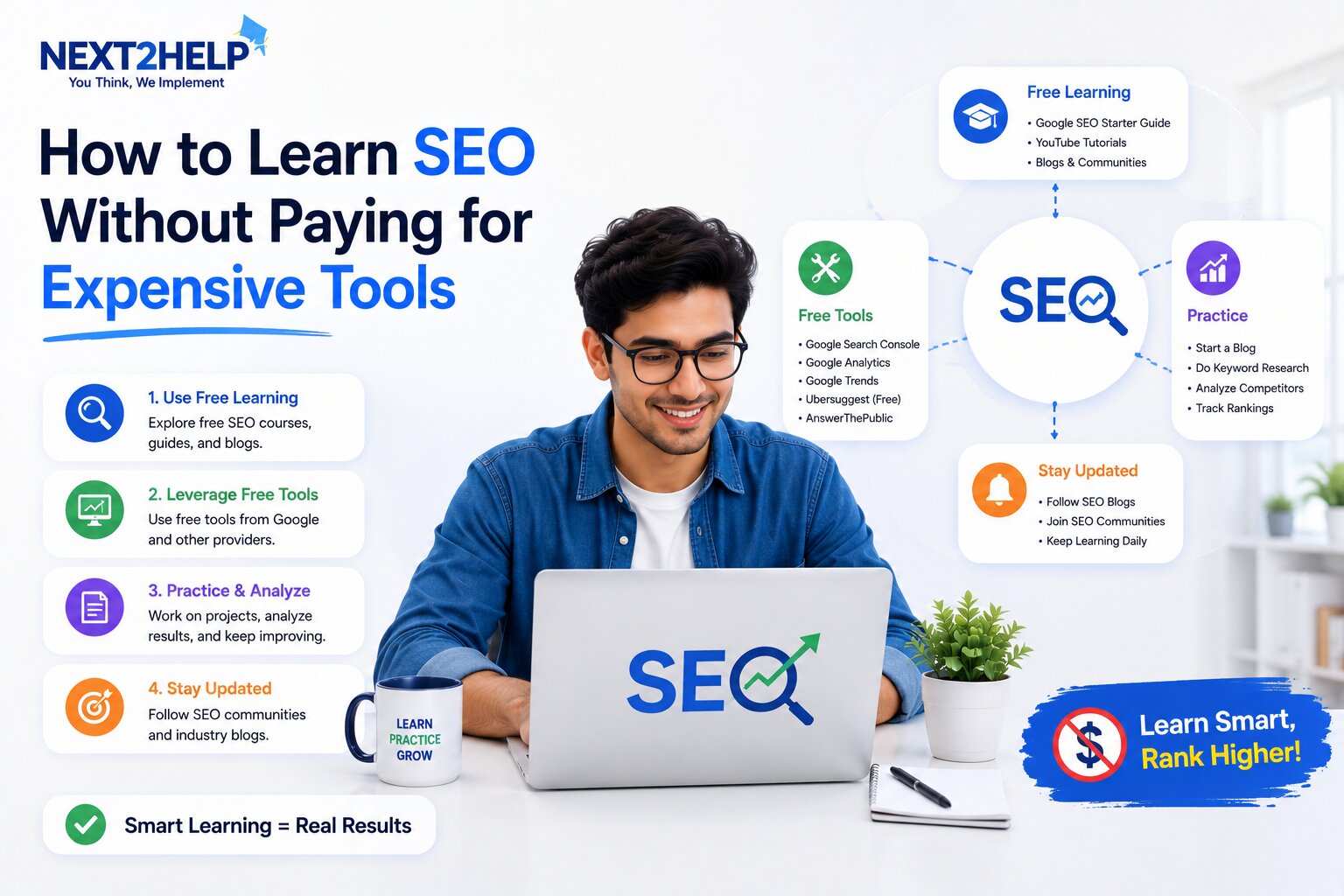
Start with Free SEO Learning Resources
The foundation of SEO is understanding how search engines work. Before investing in any tool, focus on learning the core concepts:
Keyword research
On-page SEO
Technical SEO
Link building
Content optimization
User experience signals
Google itself offers valuable free resources through its Search Central documentation. You can also learn from reputable SEO blogs, YouTube channels, industry webinars, and online communities.
The key is to build a strong understanding of SEO principles rather than relying on tools to do the work for you.
Use Free SEO Tools Effectively
You don't need expensive software to begin practicing SEO. Several free tools provide enough data for learning and implementing SEO strategies.
Some useful free SEO tools include:
Google Search Console for performance tracking
Google Analytics for visitor insights
Google Trends for keyword trends
Google Keyword Planner for keyword research
PageSpeed Insights for website performance analysis
Google Rich Results Test for structured data validation
These tools help you understand how websites perform in search results and identify opportunities for optimization.
Free Keyword Research Techniques
Keyword research is one of the most important SEO skills. Even without premium tools, you can discover valuable keywords by:
Using Google Autocomplete
Exploring "People Also Ask" questions
Analyzing related searches
Reviewing competitor content
Using Google Trends to identify rising topics
This approach helps you find keywords that real users are searching for while building practical SEO knowledge.
Practice SEO on Real Projects
SEO is a skill best learned through hands-on experience. Create a blog, portfolio website, or niche website where you can test different SEO strategies.
By working on a real website, you'll learn how to:
Optimize title tags and meta descriptions
Improve content structure
Build internal links
Monitor rankings
Analyze search performance
Practical experience teaches lessons that no tool or course alone can provide.
Learn SEO Through Content Creation
Content is the backbone of modern SEO. Writing blog posts helps you understand:
Search intent
Content optimization
Keyword placement
User engagement
Topic authority
Regular content creation allows you to see how Google indexes and ranks pages over time, making it one of the best ways to learn SEO organically.
Join a Structured SEO Training Program
Self-learning is effective, but a structured course can significantly accelerate your progress. A professional training program provides expert guidance, practical assignments, and industry-relevant skills that are difficult to acquire independently.
Why Choose an AI-Based Digital Marketing Course?
The digital marketing industry is rapidly evolving, with artificial intelligence transforming SEO, content creation, keyword research, and marketing automation. Learning traditional SEO alone is no longer enough.
The Next2Help AI Based Digital Marketing Course in Noida is designed to help students and professionals learn modern SEO techniques alongside AI-powered marketing strategies. The course covers:
Search Engine Optimization (SEO)
AI-assisted content marketing
Google Ads and PPC
Social media marketing
Performance marketing
Analytics and reporting
Practical projects and real-world applications
By combining SEO fundamentals with AI-driven tools and strategies, learners can stay ahead in today's competitive digital marketing landscape.
Final Thoughts
Learning SEO does not require expensive tools. With free resources, Google's own platforms, consistent practice, and quality training, anyone can develop strong SEO skills. Focus on understanding search intent, creating valuable content, optimizing websites, and gaining practical experience.
For those seeking a faster and more structured learning path, enrolling in the Next2Help AI Based Digital Marketing Course in Noida can provide the skills, mentorship, and industry exposure needed to build a successful career in SEO and digital marketing.
Remember, successful SEO professionals are not defined by the tools they use—they are defined by their understanding of how search engines and users interact online.

Categories
Recent posts


Unlock Your Future with WC Skill's Best ...
8 Jul 2024
is react native worth learning in 2026
17 Mar 2026
Is Seo Course Worth It
13 Mar 2026